
Last updated October 16, 2026
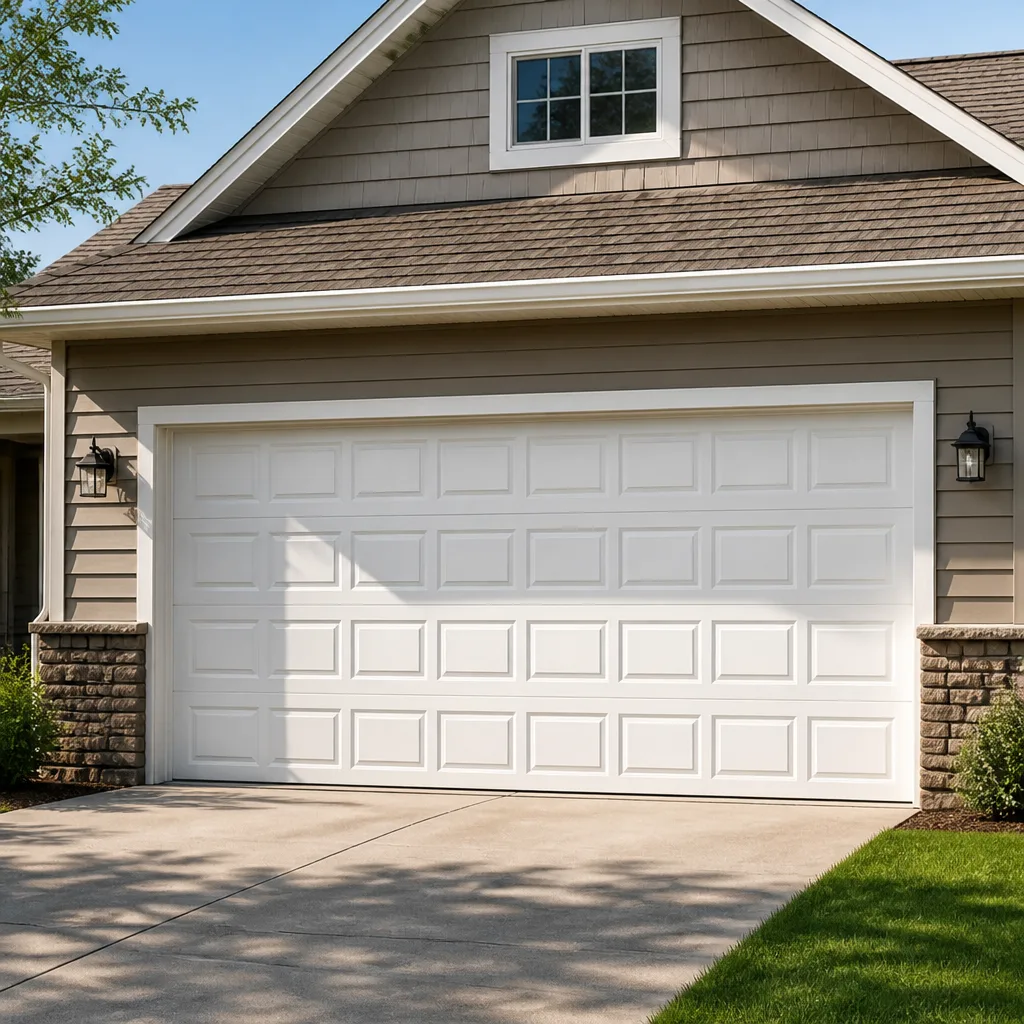 Raised-panel steel
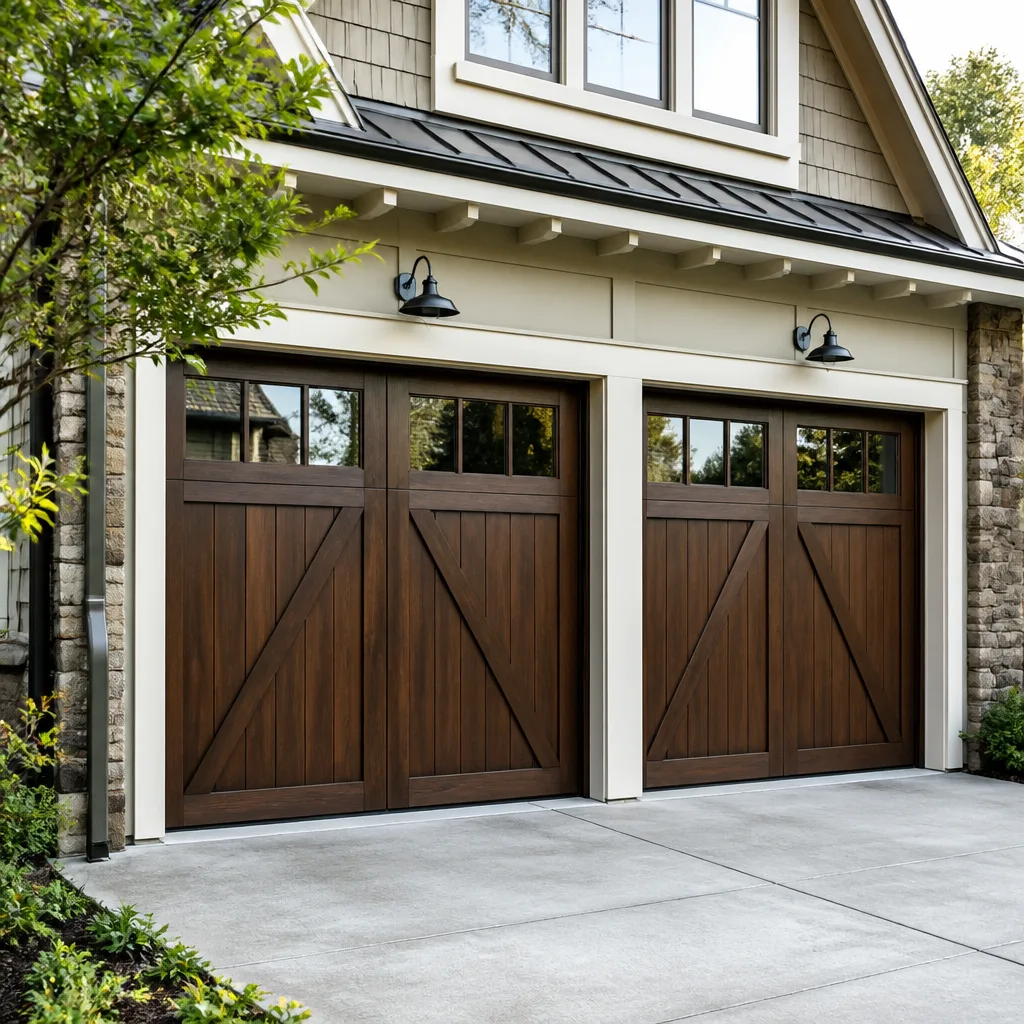 Carriage house
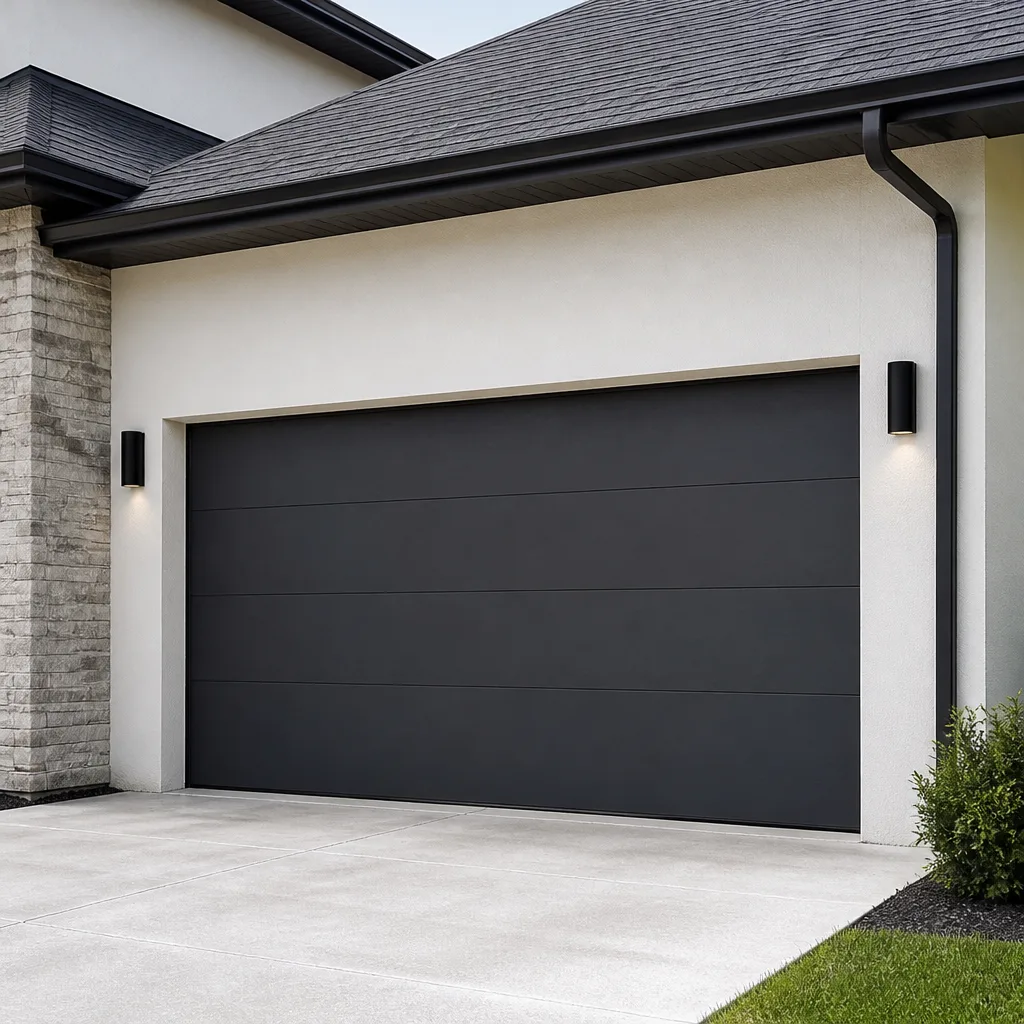 Modern flush
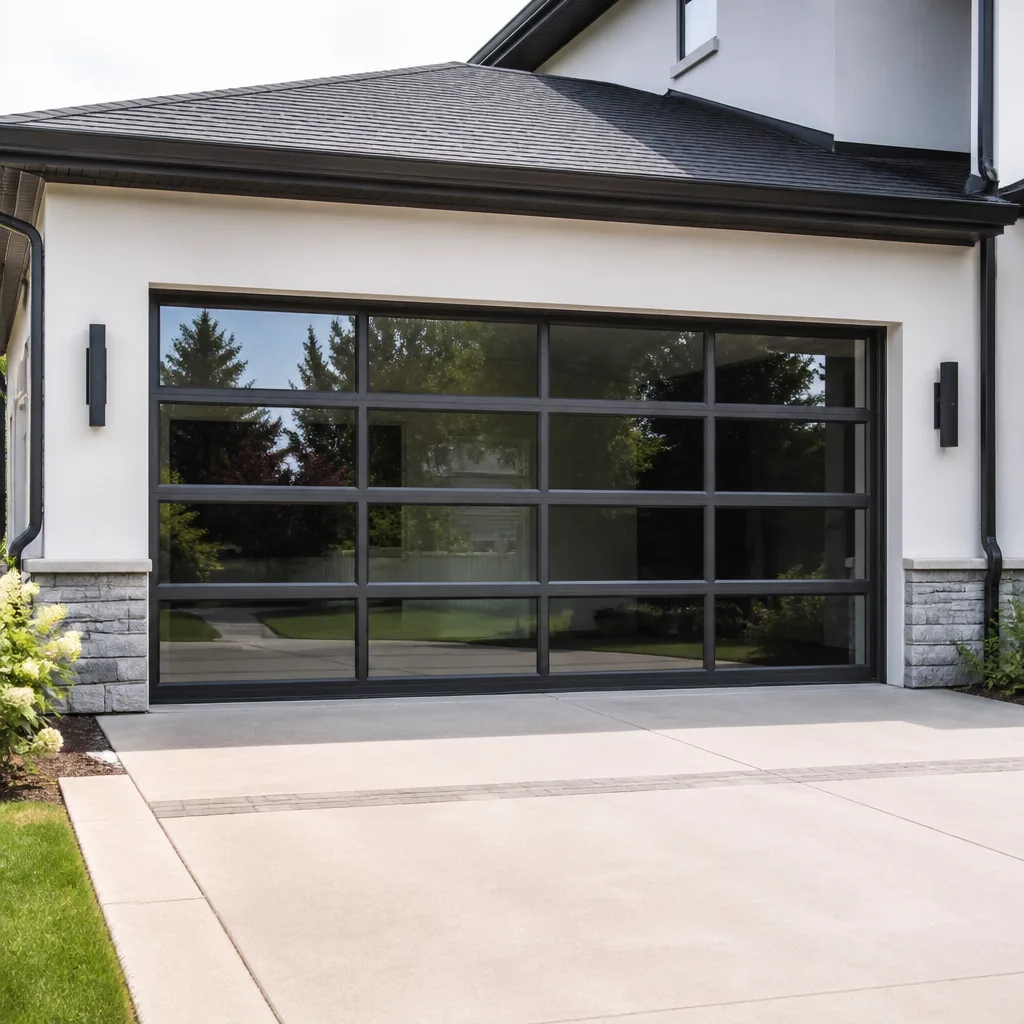 Full-view glass
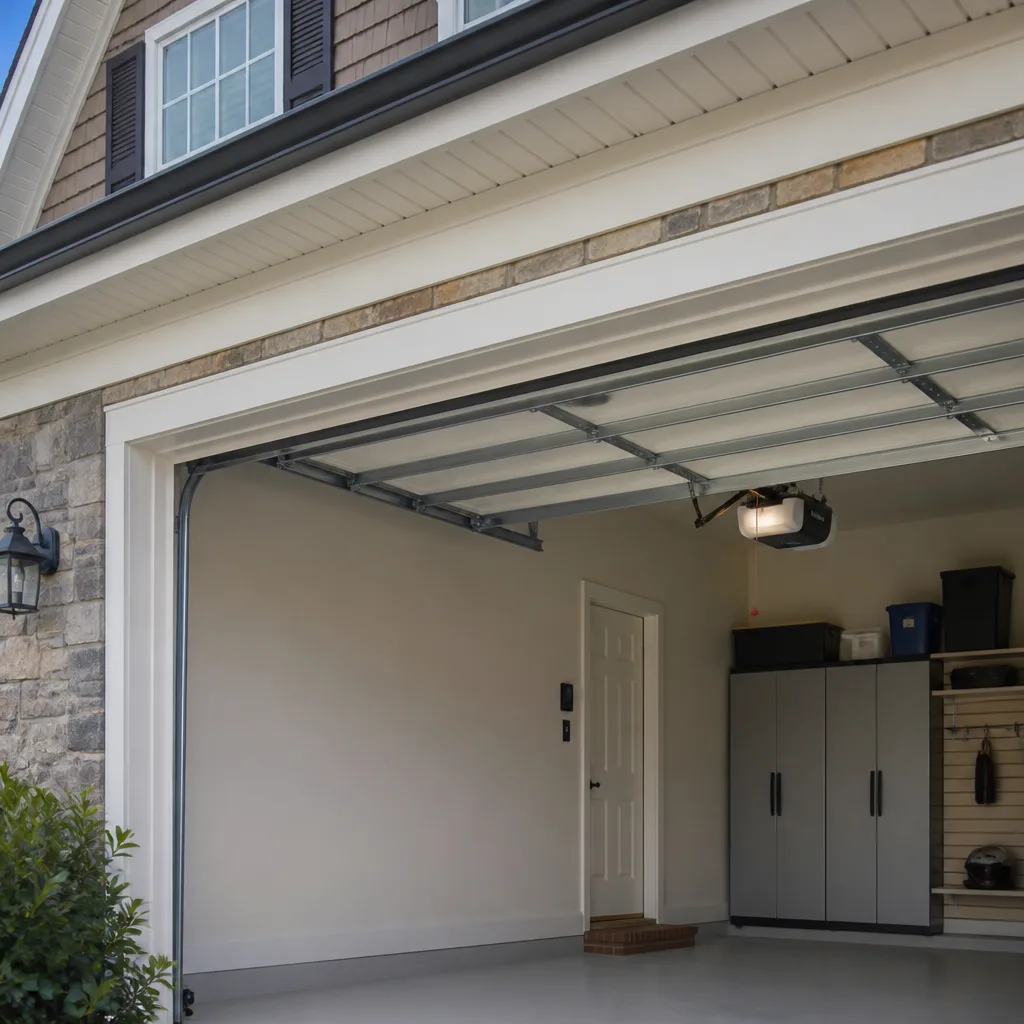 LiftMaster openers
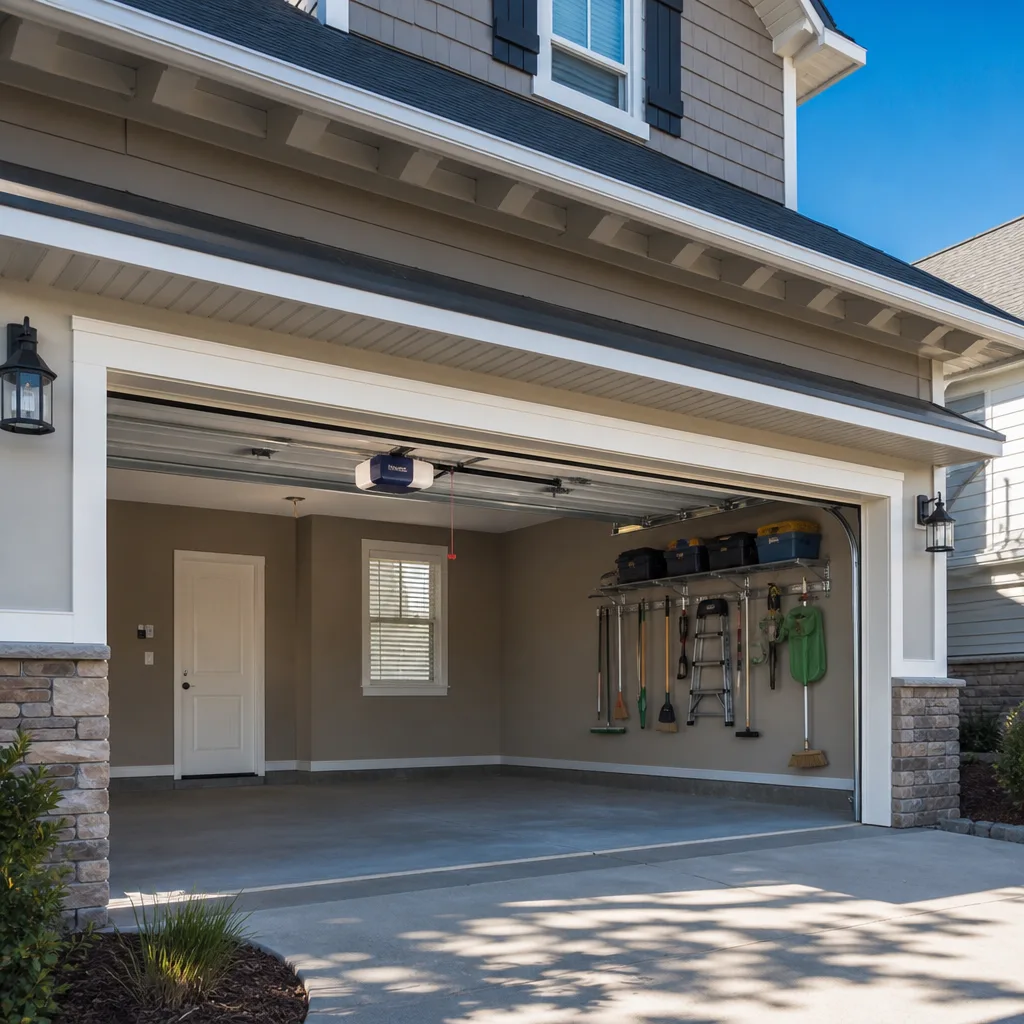 Chamberlain openers
Full 25-point door and opener safety check with every visit - springs, cables, rollers, tracks, and your LiftMaster or Chamberlain opener included
You get a price before we start. It does not change when the truck arrives.
Get your free estimateSeasonal Garage Door Care for Hempstead: Year-Round Homeowner’s Guide
Every November, as the first hard freeze settles over Nassau County, garage door repair phones light up across Hempstead. It’s not a coincidence. Most of those calls trace back to maintenance deferred during August, when the door still worked fine and the weather made it easy to ignore. The truth is, your garage door is the largest moving object in your home, it cycles roughly 1,500 times a year in a typical Hempstead household, and every one of those cycles adds microscopic wear that compounds seasonally. This guide maps exactly what each season does to the springs, cables, rollers, seals, and opener, and what you can do about it in about 20 minutes per season. For a deeper dive, see The Complete Guide to Garage Door in Hempstead. If that sounds like work, it’s far less work than a snapped torsion spring at 11 p.m. on a 14-degree night in February.
Styles & brands we work with
Quick Answer
Seasonal garage door care in Hempstead means four focused checkups per year: spring (post-winter corrosion and seal damage), summer (humidity-driven wood swelling and opener heat stress), fall (20-minute pre-winter prep), and winter (cold-weather lubrication and travel limit adjustments). The most important season is fall, because a 20-minute prep in October prevents most February breakdowns. For Hempstead’s freeze-thaw cycles and coastal humidity, the two critical components to watch are torsion spring tension and bottom seal integrity.
Table of Contents
- Spring: What Winter Did to Your Hardware
- Summer: Humidity, Heat, and Opener Strain
- Fall: The 20-Minute Pre-Winter Prep That Prevents Most Breakdowns
- Winter: What Homeowners Do Wrong When the Door Slows
- Year-Round: A Reminder Cadence That Actually Sticks
- Common Mistakes to Avoid
- When to Call a Professional
- Frequently Asked Questions
- The Bottom Line
Spring: What Winter Did to Your Hardware
By March, your garage door has survived roughly 90 days of ice, road salt tracked in on tires, and repeated freeze-thaw cycles. In Hempstead, where winter temperatures swing across the freezing line dozens of times, metal components expand and contract at different rates. That differential movement is how bolts loosen, brackets shift, and hairline cracks open in plastic and nylon fittings.
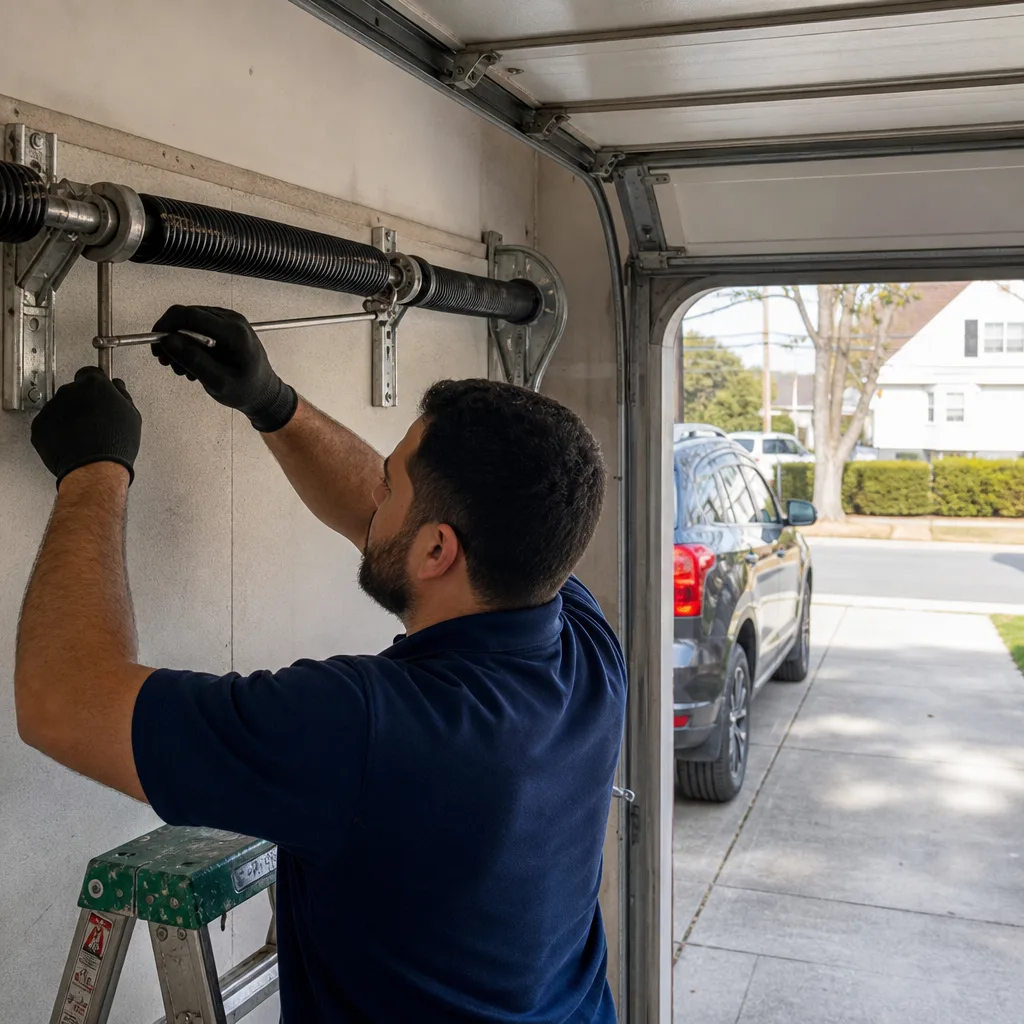
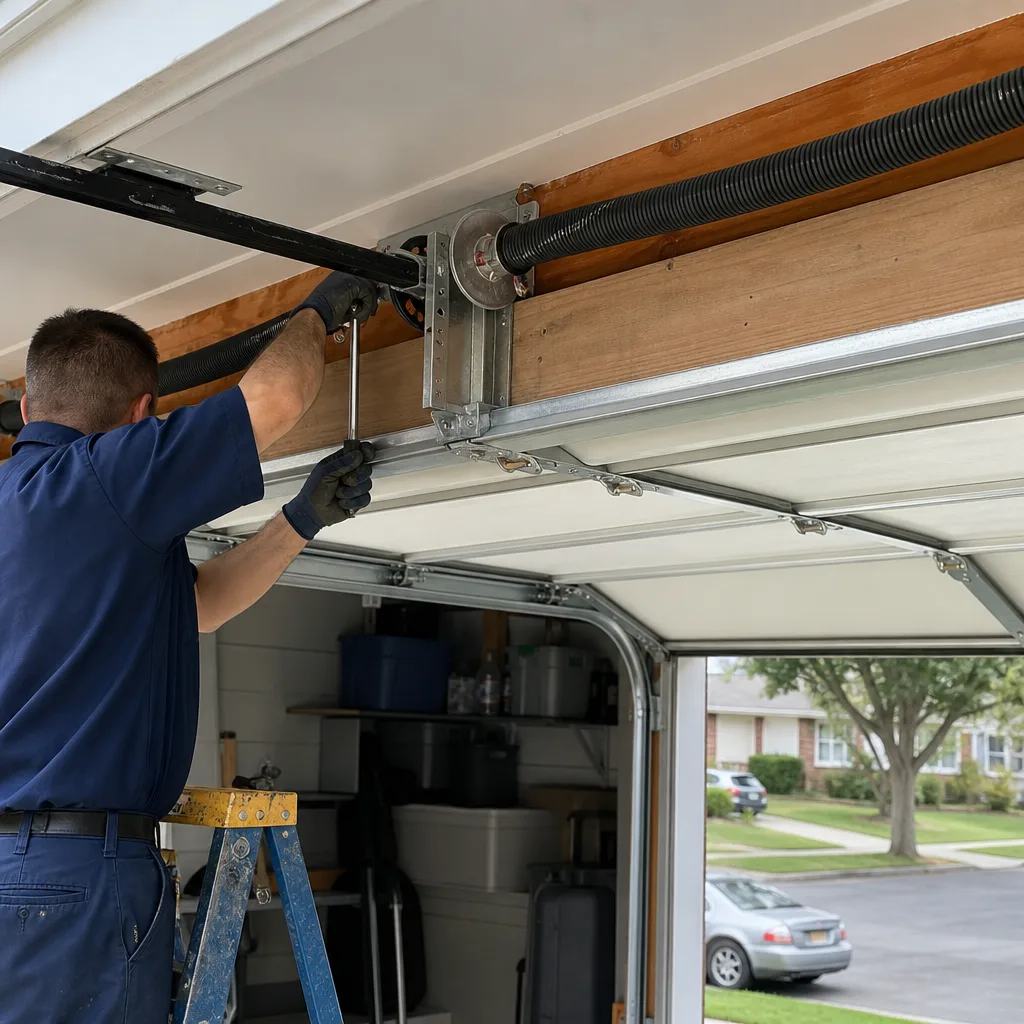
The first thing to inspect is the torsion spring. The torsion spring is the thick coiled spring mounted above the door that bears most of the lifting load. It’s under extreme tension and should never be touched or adjusted by hand. Look at it. If the spring shows rust blooming along the coil surface, that’s the first stage of pitting, and pitting is what eventually leads to a snap. A snapped spring is the single most common reason we get called out in spring, and it’s almost always preceded by visible rust the homeowner noticed but didn’t act on.
Next check the bottom seal, the rubber gasket running along the underside of the door. Winter ice makes it brittle. If the seal has cracked, split, or pulled away from its aluminum track, water, debris, and cold air are getting in. In Hempstead’s low-lying areas, a failing bottom seal also lets groundwater seep beneath the door during spring rains, which leads to warped track bases and rusted panel bottoms.
Hardware inspection takes five minutes:
- Tighten all hinge bolts and track bracket lag screws. Use a socket wrench, not pliers. If a lag screw spins without tightening, the hole is stripped and needs a wider screw or a repair plate.
- Check the lift cables on both sides. Frayed strands near the bottom drum mean the cable is failing. Do not attempt a DIY cable repair on a torsion spring system. Garage Door Cable Repair in Hempstead is a job for a technician with the right winding bars and a healthy respect for stored energy.
- Wipe down the tracks with a dry cloth. If you find grit or salt residue, clean it out with a damp rag and then dry thoroughly. Wet tracks in spring collect pollen and dust.
- Run the door once by hand (with the opener disengaged) to feel for rough spots, catches, or changes in weight. A door that feels heavier than it did in October has a spring that’s losing tension or a seal that’s dragging.
Summer: Humidity, Heat, and Opener Strain
Summer in Hempstead brings a particular combination that stresses garage door systems in ways most owners don’t connect to the weather: sustained humidity above 70%, temperature swings inside uninsulated garages that can vary 40 degrees between morning and mid-afternoon, and coastal air carrying salt and moisture from the Atlantic.
If your door is wood, watch for panel swelling. Wood absorbs ambient moisture, and a door that fit its opening in April can begin binding against the jamb by July. The tell is a door that scrapes or catches on either side about two-thirds of the way up. Swollen panels also add weight, and added weight makes the opener motor work harder. A LiftMaster or Chamberlain unit that’s been running against a swollen wood door through a Nassau County summer will run hot, and a motor that runs hot trips its internal thermal overload. The door refuses to respond, then mysteriously works again an hour later. That’s not a defective opener. That’s an overheated one.
For metal doors, the summer issue is different. The door itself handles humidity fine, but the rollers and hinges don’t. Nylon rollers are the better choice for Hempstead specifically because they don’t corrode in coastal air. Steel rollers develop surface rust that grinds against the track and adds friction. In our experience, we replace more rusted steel rollers in Hempstead homes during summer than any other season except spring.
Lubrication intervals also shorten here. The standard advice is to lubricate every six months. In Hempstead’s summer humidity, we recommend every four. Use a white lithium grease on hinges and springs, and a spray silicone on rollers. Never use WD-40 as a primary lubricant. It’s a water displacement fluid, not a long-term lubricant, and it strips whatever lubricant is already there. The door will seem smoother for a day, then run dry and rough.
One more thing about summer: opener remotes and wall panels act up in high humidity, especially units mounted on exterior walls that get direct afternoon sun. If your remote works intermittently in July but perfectly in September, it’s not worth replacing the logic board before checking the lens and the photo eye alignment. Dust, pollen, and moisture film on the safety sensors cause more false “door won’t close” issues in summer than actual mechanical failures.
Fall: The 20-Minute Pre-Winter Prep That Prevents Most Breakdowns
October is the month to do the real work. The sequence below takes about 20 minutes, requires no special tools beyond a socket wrench, a level, and a spray lubricant, and it eliminates the majority of cold-weather failures we see in Hempstead’s peak season. Do it before the first hard freeze, which in Nassau County typically arrives in late November.
- Disengage the opener and run the door by hand. Pull the red emergency release cord. Lift the door. It should feel balanced, meaning it opens smoothly and stays put halfway up without your hands on it. If it drops or rises on its own, the spring tension is off. A door that’s slightly heavy in October will be noticeably heavy in February, and the extra load will burn out an opener motor.
- Inspect the bottom seal for cracking or flattening. Fold it back and check the rubber. If it’s lost its shape or developed splits, replace it now. A $30 seal replaced in October saves a winter of cold drafts across your garage floor and keeps ice from bonding the seal to the concrete. Ice adhesion is how seals get ripped off.
- Lubricate thoroughly. Hinges, spring coil, bearing plates, and rollers. Use a spray silicone designed for garage doors. Hold a rag behind the rollers so the spray doesn’t coat the track rails. If the track gets slick, the rollers slide instead of roll, and that flat-spots the nylon.
- Tighten every visible bolt and lag screw. Go around the hinges, the track brackets, and the opener rail. Vibration from months of daily cycling loosens hardware. A loose track bracket under cold-weather load is how doors come off their tracks entirely.
- Check the safety reversing system. Place a roll of paper towels on the ground under the door’s path and close it. The door should contact the roll and reverse within a few inches. If it doesn’t, adjust the downward force setting on the opener. This is a safety system, not an optional feature. Test it twice a year.
- Verify the photo eye alignment. Most openers have small indicator lights on each photo eye. Both should be steady green or amber, depending on the unit. If one is blinking, clean the lens with a dry microfiber cloth and realign until the light goes steady.
That’s the whole sequence. Twenty minutes in October saves the January call you’d rather not make. And if you find something in the sequence you don’t feel right about, call before the cold sets in. Garage Door Repair in Hempstead costs less in October than the same job as an emergency in February.
Winter: What Homeowners Do Wrong When the Door Slows
The most common winter complaint in Hempstead is a door that slows, groans, or stalls partway up on cold mornings. And the most common homeowner response is to reach for the wall button and keep pressing it, or worse, to give the door a shove to “help” it along. Both make the problem worse.
Here’s what’s actually happening. Cold air thickens grease. The lubricant in your hinges and on your spring is more viscous at 18 degrees than it is at 68, so the door moves slower. That’s normal and expected. What isn’t normal is a door that stops, reverses, or struggles badly. That indicates one of three things:
- The spring is losing tension. Torsion springs lose a small percentage of lifting force for every 10-degree drop in temperature. If the spring was already marginal from age and use, the cold drops it below what the door needs to lift cleanly.
- The opener’s travel limits are set wrong. If the limit is set even slightly too low on the “up” side, cold-weather contraction in the door frame and track can make the opener think the door has reached full open when it hasn’t, triggering a safety reversal.
- The opener gear is worn. Cold temperatures reduce grease mobility in the opener head itself. A gear that was fine in September may slip in January, producing a grinding noise and intermittent operation.
The one fix that turns a service call into a 90-second owner adjustment is the travel limit. On most LiftMaster, Chamberlain, and Genie openers, there are small adjustment knobs or screws on the motor unit labeled “up limit” and “down limit.” If the door stalls a foot shy of fully open, turn the up-limit adjustment one increment toward “up” and test again. Do not touch anything else in the opener head. This single adjustment accounts for a meaningful percentage of our winter service calls that ultimately have no mechanical fault.
What you should not do in winter: do not spray lubricant on a frozen door and expect it to help. Cold grease needs time and warmth, not more product. Do not force a stalled door. You’ll strip a gear or pull the door off its track, and both are expensive. And do not leave the door half-open in a storm. The wind load on a partially open door bends panels and twists tracks, especially in Hempstead’s winter nor’easter conditions.
Year-Round: A Reminder Cadence That Actually Sticks
Seasonal prep only works if it happens. The standard advice is “check your door every season,” but most homeowners in Hempstead forget by April. The fix is to tie the check to something already on your calendar.
We recommend setting four phone reminders tied to dates that correspond to seasonal weather shifts in Nassau County:
- March 15: Post-winter corrosion check. This lands after the last typical hard freeze and before spring rain sets in.
- June 15: Pre-humidity check. This is when Hempstead’s humidity starts building, and wood panels begin swelling.
- October 15: The 20-minute pre-winter prep. Non-negotiable. Do the full sequence above.
- January 15: Mid-winter check. Quick visual on the spring, cables, and seal. If something looks off, call before it becomes an emergency.
Tie each reminder to a specific time, like a Saturday morning, and to a specific trigger, like when you’re already putting the bins out. The goal isn’t to think about your garage door more; it’s to make checking it automatic. Most of our Hempstead service calls come from two buckets: homeowners who never think about their door until it fails, and homeowners who check it religiously. The second bucket spends far less money with us over the life of the door.
One more note from the field. If you’re on the south side of Hempstead near the Meadowbrook or closer to the Atlantic influence, you’ll see more corrosion than folks north of the Southern State. Salt air travels. If you see rust on the door springs or the bottom panel seams, address it sooner rather than later. Rust never self-corrects.
Common Mistakes to Avoid
- Waiting for a noise to mean something. A door that starts squeaking or grinding has been telling you for weeks that it needs lubrication. By the time the noise becomes a bang, you’re into replacement territory. Address the squeak within a week.
- Adjusting spring tension because the door “feels heavy.” Torsion springs store enough energy to kill or maim. Never touch them. If the door is heavy, and it’s not a lubrication issue or a travel limit issue, call a professional. This is the one component on your door that should be zero-DIY.
- Replacing the opener because the door won’t move in winter. A cold-stalled door is often a door problem, not an opener problem. Check the balance and the travel limits before condemning the motor. We’ve seen homeowners replace perfectly good LiftMaster units when the actual fix was a $75 spring adjustment.
- Power-spraying the door and track. Pressure washers force water into bearings, hinge pins, and the spring coils. That water corrodes. Use a garden hose and a soft brush, and avoid directing water at the opener or the safety sensors.
- Painting over a rusted bottom panel. Paint traps moisture against the metal and accelerates the rust from behind. Remove the rust, treat the metal, then prime and paint. Or replace the panel if the rust has penetrated.
- Skipping the safety reversal test because “it worked last time.” Safety reverses go out of adjustment gradually, and every month they’re out of adjustment is a month a child, a pet, or a delivery package is at risk. Test twice a year, no exceptions.
- Propping the door with a ladder or bucket when it won’t stay up. If the door won’t hold position, the spring is failing or has failed. Propping it is a stopgap that fails violently when the prop gives way. Disengage the opener and leave the door closed until you can get someone out.
When to Call a Professional
Some jobs are owner-grade. Some aren’t. If you see a frayed cable, call. If the spring is snapped or rusting through, call. If the door has come out of its track or hangs at an angle, call. If the opener runs but the door doesn’t move, that’s typically a gear or chain issue inside the unit that requires bench diagnosis. And if the door has been hit by a car, even a low-speed bump, stop using it and get an inspection. A bent track or compromised panel is a failure waiting for the next cycle.
We work on all of it. Garage Door Opener Repair in Hempstead if the motor’s the problem. Cable and spring work if the lifting system’s the problem. And if you’re not sure what the problem is, that’s what the diagnostic visit is for. Brock Garage Doors Hempstead offers free estimates in Hempstead, and you’ll have a written price before any work starts. Call (516) 559-5490.
Frequently Asked Questions
Every four months is the sweet spot for Hempstead’s coastal humidity, with one of those sessions being part of your October pre-winter sequence. Use spray silicone on rollers and white lithium on hinges and springs. If you hear the door squeaking between intervals, lubricate sooner. Call (516) 559-5490 if you’re not sure what products to use.
A DIY seasonal check costs whatever you spend on lubricant, roughly $15 to $25 a year. Professional maintenance visits in Hempstead typically run $75 to $150, depending on what the technician finds and whether wear items like rollers or the bottom seal need replacement. See our Garage Door Cost Breakdown: The Hempstead Homeowner’s Reference for 2026 for full pricing details. Cable repairs, when needed, run $150 to $275 depending on cable type and drum condition. Call (516) 559-5490 for a free estimate on your specific door.
The fall prep sequence is designed for a homeowner with basic tools and patience. Tightening bolts, lubricating moving parts, and testing the safety reverse are all owner-grade tasks. The line you shouldn’t cross is anything involving torsion spring adjustment or cable replacement. If you find either, call (516) 559-5490. Brock Garage Doors Hempstead home is happy to handle whatever you don’t feel comfortable with.
Cold air thickens the grease on your hinges and spring, which makes the door run louder and slower than it does in June. A louder door in winter is usually normal. A door that grinds, shudders, or stalls is not. The difference matters. If you’re hearing metal-on-metal, call (516) 559-5490 and describe what you’re hearing.
Torsion springs are rated for cycles, not years, and they average 10,000 cycles. A Hempstead household that cycles the door four times a day puts roughly 1,500 cycles a year on the spring, right around a six-to-seven-year lifespan. If your door cycles eight or more times a day, expect less. If you’ve lost track of when the spring was last replaced, check for rust blooming on the coil. Pitting is the leading indicator that a spring is nearing the end.
Yes. Newer doors fail less, but they don’t fail never. The components that wear are the same on a new Wayne Dalton as on a 20-year-old Craftsman: rollers, cables, seals, and hinges. Catching a $40 bottom seal before it fails saves the water damage that seal prevents. And the warranty on most new doors requires evidence of basic maintenance if you ever need a claim. A ten-minute seasonal check protects the warranty too.
The Bottom Line
Four seasons, four checkups, about 20 minutes each. Hempstead’s climate works your garage door harder than the doors of most of the country: freeze-thaw stress in winter and spring, coastal humidity in summer, and a compressed fall window when the prep either happens or doesn’t. The homeowner who does the fall sequence every October will call for major repairs less often, pay less over the life of the door, and avoid the February refrigerator-cold phone call. You don’t need to be an expert. You need to be consistent. And when something’s outside your comfort zone, Garage Door Cable Repair in Hempstead is a phone call away, or call us at (516) 559-5490. The estimate is free, and the price is in writing before anything turns.
Written by Wade Mercer, Owner at Brock Garage Doors Hempstead, serving Hempstead since 2001. Browse more guides & resources on garage door care.
See the difference
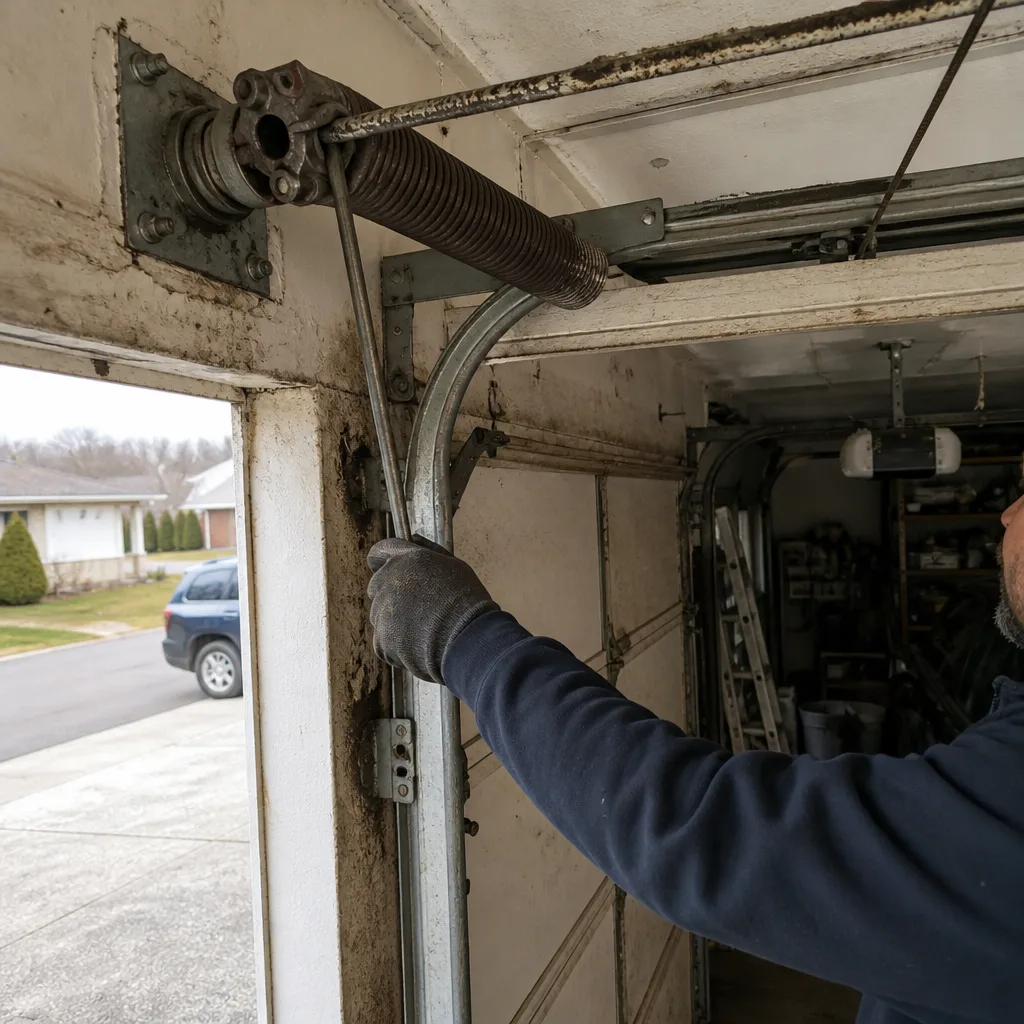 Before
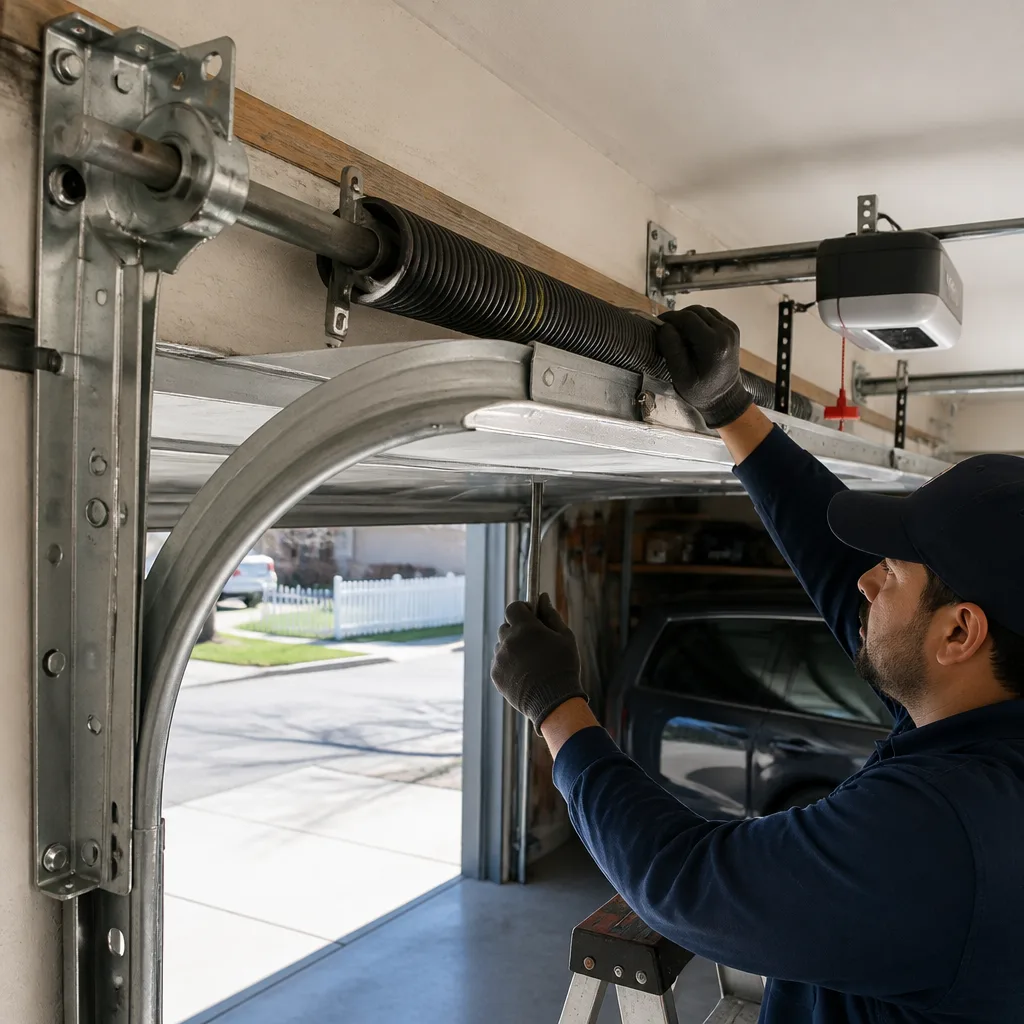 After
After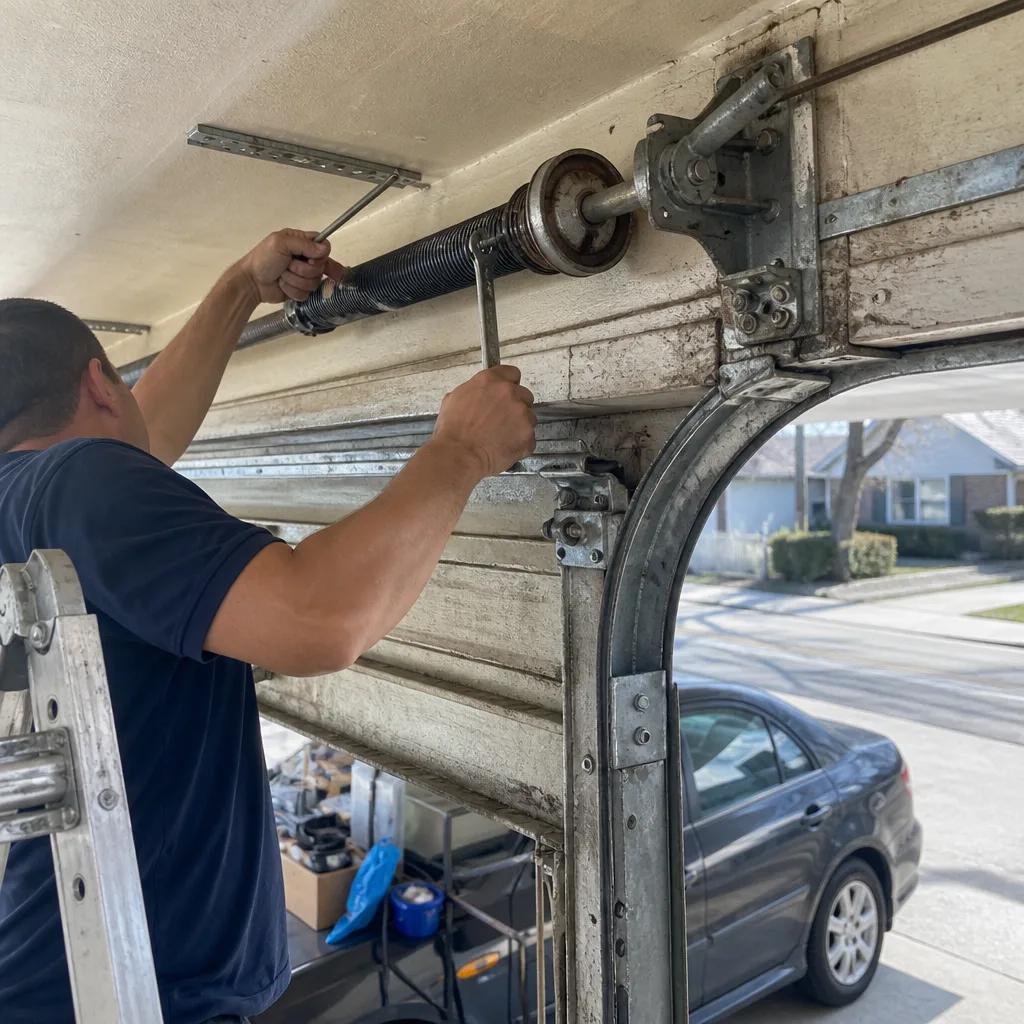 Before
 After
After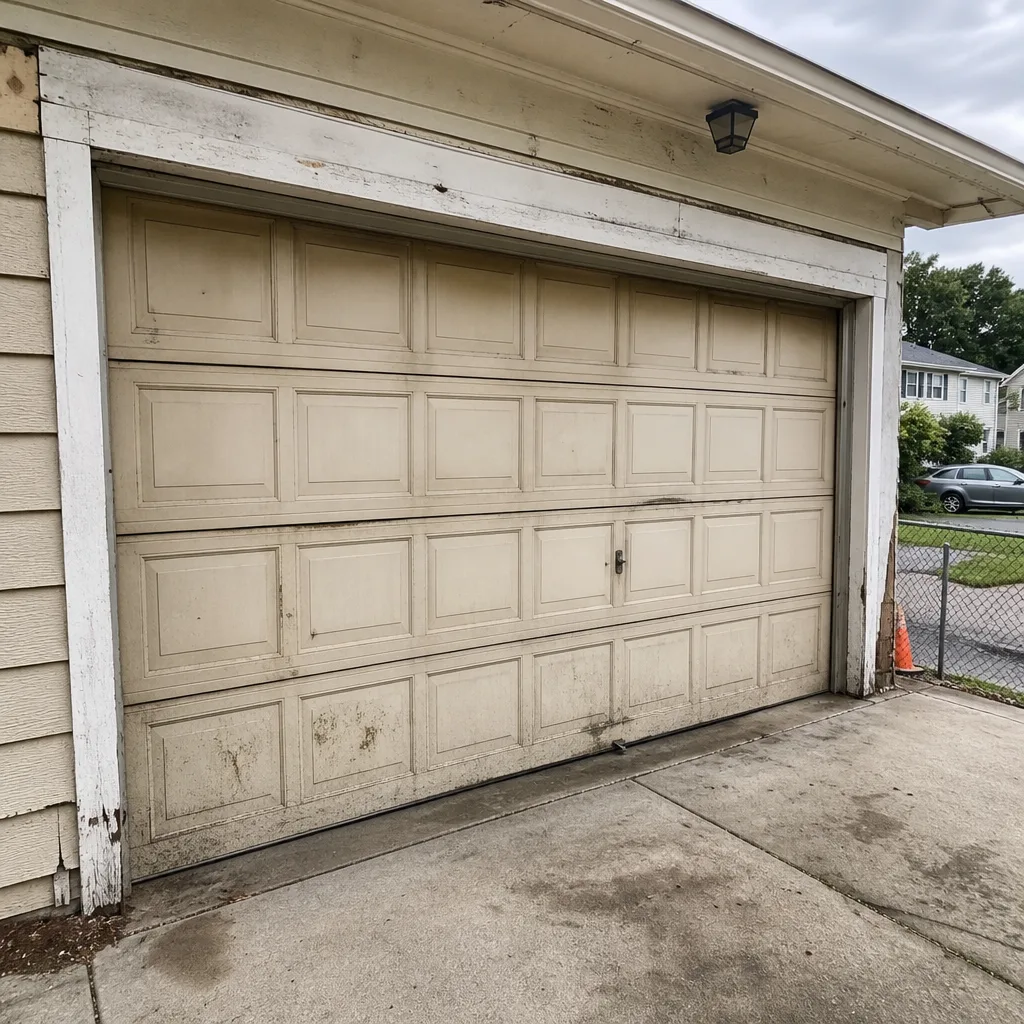 Before
 After
After